
The subtext here is that nobody else really matters to America today; only China, because nobody else can truly hurt them, points out Mihir S Sharma.

Indian benchmark indices Sensex and Nifty saw a rebound in early trade, primarily driven by a more than 4 per cent surge in Tata Consultancy Services (TCS) shares following its robust Q2 net profit announcement. Track Sensex, nifty on October 9.

Investors who bought attractively valued IPOs and held on have earned strong returns, particularly when the money raised went into companies rather than into the pockets of exiting shareholders.

Indian benchmark indices Sensex and Nifty experienced declines in early trade, ending a two-day rally, driven by a spike in Brent crude oil prices above USD 101 per barrel and investor caution ahead of the Reserve Bank of India's monetary policy decision. Track Sensex, Nifty on October 7.

The Supreme Court has questioned the Centre's decision to cap trade margins on anti-cancer drugs at 30 per cent, asking why similar restrictions could not be extended to other medicines and medical consumables, citing glaring disparities between procurement costs and maximum retail prices (MRPs).

Delhi Police have seized over 707 kg of illegal firecrackers in Trilokpuri, east Delhi, leading to the arrest of Vikas Jain. The consignment is suspected to have been procured from a supplier in Pataudi, Haryana, and further investigations are underway to trace the source and other individuals involved in the illegal supply network.
Indian benchmark indices, Sensex and Nifty, extended their rally in early trade, driven by strong buying in bank stocks, Reliance Industries, and positive global cues, despite foreign institutional investors offloading equities.

The Aam Aadmi Party (AAP) has claimed that Punjab Chief Minister Bhagwant Mann was detained for three hours at the Delhi airport upon his return from Paris and subsequently fined Rs 50,000. AAP media in-charge Baltej Pannu alleged that the incident was due to "tremendous pressure from above" and linked it to the Centre's repeated denial of permission for Mann's foreign visits, accusing the central government of obstructing Punjab's progress.

Sivakasi, India's fireworks capital, is eyeing global markets as green crackers, rising demand and interest from overseas buyers offer a chance to challenge China's dominance.

Mumbai Police have busted an alleged flesh trade racket operating under the guise of a spa centre in Borivali, arresting the cashier and rescuing four women. The accused has been booked under the Bharatiya Nyaya Sanhita and the Immoral Traffic (Prevention) Act.

The Securities and Exchange Board of India (Sebi) has confirmed its interim directions against Rajesh Exports and its chairman, Rajesh Mehta, due to unresolved concerns regarding financial disclosures, consolidation of overseas subsidiaries, and alleged fund routing through related parties.

The Supreme Court expressed dissatisfaction with the Centre's cap on anti-cancer drug trade margins, questioning why similar controls aren't applied to other medicines. The court highlighted significant markups on common drugs and medical devices, urging the government to expand its price regulation efforts and present modalities by October 27.

Former US President Donald Trump has once again claimed he prevented a war between India and Pakistan by threatening them with steep tariffs, expressing disappointment that his efforts have not earned him a Nobel Peace Prize. India, however, maintains that any de-escalation was a direct agreement between the two nations.

Police in Palghar, Maharashtra, seized banned tobacco products and pan masala worth Rs 49.24 lakh from a tempo on the Mumbai-Ahmedabad highway. The vehicle's driver was arrested, and a case was registered under the Bharatiya Nyaya Sanhita and the Food Safety and Standards Act.

Sustained selling by foreign investors is weighing on domestic equities, with the benchmark Sensex and Nifty 50 down 15.60 per cent and 14.4 per cent, respectively, this year.

Mid and smallcap mutual fund schemes in India have quadrupled their assets under management (AUM) to 10 trillion in five years, driven by strong investor inflows and market gains, with experts anticipating continued growth despite mixed valuations.

Union Home Minister Amit Shah on Tuesday met the families of individuals who lost their lives due to drug-related issues in Punjab, saying he had never felt so deeply saddened in life as he did while meeting them and also called out the AAP government for failing to curb the menace.

Donald Trump criticised France's immigration policies, linking them to ongoing nationwide protests and using the situation to justify his own stance on US border control. His remarks come as France faces widespread demonstrations over the cost of living and educational funding, leading to nearly 1,000 arrests. French President Emmanuel Macron, without naming Trump, condemned foreign leaders for exploiting France's domestic unrest for their political campaigns.

Finance Minister Nirmala Sitharaman announced that India is set to introduce a new, more investor-friendly bilateral investment treaty (BIT) framework, which is expected to receive Cabinet approval shortly, aiming to provide sharper protection for investors from both sides.

Indian benchmark indices Sensex and Nifty experienced declines in early trade, influenced by the Reserve Bank of India's (RBI) recent repo rate hike and its signal for continued monetary tightening, coupled with rising crude oil prices and foreign fund outflows. Track Sensex, Nifty on October 8.

Growth in India's currency in circulation (CiC) has reached a five-year high, primarily due to deposits under the Foreign Currency Non-Resident (Bank), or FCNR(B), scheme, leading to a robust increase in reserve money, according to the Reserve Bank of India's (RBI) 'State of the Economy' report.

HCLTech, India's third-largest IT services company, reported robust Q2 revenue growth of 2.3 per cent in constant currency, driven by services and ER&D segments, with strong new deal wins of $3.3 billion and significant traction in its AI business. Despite exceeding margin estimates and raising revenue guidance, some brokerages remain cautious due to the stock's premium valuation compared to peers.
Thane Crime Branch arrested two individuals with 2.72 kilograms of ambergris, also known as whale vomit, valued at Rs 2.72 crore in the international market. The protected marine substance, used in luxury perfumes, was seized during a trap operation, and a case has been registered under the Wildlife Protection Act.

Investors are set to monitor quarterly earnings, crude oil prices, the Jio Platforms initial public offering, and foreign investor activity in the upcoming holiday-shortened week, according to market analysts.

Police in Beed, Maharashtra, arrested a 48-year-old bootlegger and seized illicit Indian-Made Foreign Liquor (IMFL) and a motorcycle worth Rs 1.11 lakh. The accused was intercepted on Friday night following a tip-off.

The Directorate of Revenue Intelligence (DRI) arrested five individuals and seized 3.1 kg of foreign-origin gold, US dollars, and euros, collectively valued at over Rs 5.8 crore, near Vijayawada. The operation targeted a syndicate allegedly smuggling gold from Bangladesh to Hyderabad via Kolkata.

A strike by Dakshin Haryana Bijli Vitran Nigam (DHBVN) workers has caused widespread power outages across Gurugram, Faridabad, and Nuh districts since Wednesday night. Thousands of residents and industrial units are affected, leading to significant economic losses and disruption of essential services like water supply. Talks between authorities and striking employees have so far been inconclusive.
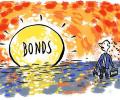
Indian government bond yields have recorded their worst losing streak in three decades, rising for the tenth consecutive week, driven by elevated crude oil prices and increasing global yields. The rupee also weakened, and India's foreign exchange reserves saw a significant decline.
Indian benchmark indices Sensex and Nifty extended their rally for a second consecutive session, driven by a decline in Brent crude oil prices below USD 100 per barrel and strong buying in banking stocks and Reliance Industries.

The main culprit behind this cost escalation are rising prices of sugar and milk that go into making the sweets.

Over a dozen mutual fund houses in India have temporarily suspended fresh subscriptions in their gold fund of funds (FoFs) and gold-silver FoFs, a move believed to be influenced by directions from the Securities and Exchange Board of India (Sebi) ahead of the festive season.

Kerala BJP president Rajeev Chandrasekhar has accused Chief Minister VD Satheesan of "selective secularism" following the arrest of a YouTuber for allegedly making communal remarks about a Fort Kochi cafe. Chandrasekhar questioned the ruling Congress and CPI(M)'s political culture, which he claims disrespects religious sentiments, while other leaders like Home Minister Ramesh Chennithala and MP Hibi Eden condemned the communal remarks and defended Kerala's secular fabric and tourism.


France is preparing for fresh demonstrations on October 24 with a "massive" police deployment and extended curfews, following days of violent unrest. The protests, initially sparked by school conditions, have broadened into a nationwide campaign against rising living costs and declining public services, leading to over 2,500 arrests and significant damage.
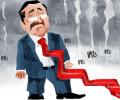
Small and medium enterprise (SME) initial public offerings (IPOs) in India are significantly underperforming mainboard listings, with 81 out of 161 SME IPOs trading below their issue price this year, and a median return of -0.2 per cent compared to a 24 per cent gain for mainboard issues.

The Swadeshi Jagran Manch (SJM) has urged the Indian government to deny permission to Elon Musk's Starlink for commercial satellite broadband services, citing national security concerns. The RSS-affiliated organisation highlighted issues with data bypassing Indian gateways and the potential for misuse by hostile actors, advocating for indigenous solutions.
Indian benchmark stock indices, Sensex and Nifty, closed lower due to profit-taking, a spike in wholesale price-based inflation, and firm crude oil prices, despite some support from easing intraday crude oil prices and rupee appreciation.

Prime Minister Narendra Modi and US President Donald Trump held a telephone conversation to review progress in bilateral ties, covering trade, defence, and energy, against the backdrop of heightened trade friction due to the 'Lindsey O. Graham Sanctioning Russia and Iran Act of 2026'.
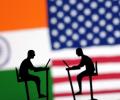
A Parliamentary Standing Committee on Commerce has urged the Indian government to swiftly conclude the proposed India-US Bilateral Trade Agreement (BTA), while ensuring India's interests are protected, recommending complete exemption for key export products like generic medicines and smartphones from future US tariff increases.

African digital financial services platform, Airtel Money, has successfully debuted on the London Stock Exchange, marking the exchange's largest initial public offering (IPO) in several years with an implied market capitalisation of about USD 7 billion.
